
Pumping Nipple Pain: Causes & Fixes (Flange Fit, Suction, Technique)
Pumping shouldn't hurt. If it does, here's what's usually behind it — and what actually helps between sessions.
Jump to a section
Why Pumping Hurts
Pumping pain almost always traces back to one of three things. Here they are, roughly in order of how often each one turns out to be the actual cause:
Wrong flange size
If your nipple rubs against the sides of the tunnel, or a lot of areola gets pulled in with it, the flange doesn't fit — and that friction is what causes soreness, even with a perfectly good pump. This is the first thing to rule out before assuming anything else is wrong.
Suction set too high
More suction doesn't mean more milk — past a certain point it just adds pain without adding output. Most pumps are designed to be used at the highest setting that's still comfortable, not the highest setting the dial allows.
Pumping too long or too often without recovery time
Even with a correct fit and reasonable suction, nipple tissue that's pumped repeatedly through the day with no break to recover can get tender — especially in the first few weeks before things toughen up naturally.
How to Check Your Flange Size
This is worth doing even if you've been pumping for a while — nipple size can change over the course of breastfeeding, and the flange size you started with isn't guaranteed to still be right months later.
Illustrative diagram, not to exact scale. The general idea across pump brands: measure nipple diameter at the base, then choose a flange tunnel a few millimeters larger — enough room for the nipple to move without touching the sides. Exact margin varies by brand; check your pump's own sizing chart.
- Measure your nipple, not your areola. Using a ruler or a printable nipple ruler (most pump brands offer a free one), measure the diameter straight across the base of your nipple in millimeters — right before pumping, not after, and without including the darker areola skin around it.
- Add a small margin for movement. Guidance varies a bit by pump brand — Spectra suggests roughly +2-3mm, Medela's own sizing chart works out to roughly +4mm — but the general idea across sources is the same: your flange should be a few millimeters larger than your bare nipple measurement, not an exact match.
- Test the fit while actually pumping. A correct fit means your nipple moves freely in the tunnel without rubbing the sides, only a small amount of areola (roughly 2-3mm) gets pulled in, and you feel suction without pinching, burning, or sharp pain.
- Re-check if anything changes. Weight change, time postpartum, and even which side you're measuring can shift your ideal size — many mothers end up needing a different size on each breast.
General flange-fitting guidance cross-checked against Cleveland Clinic's breastfeeding medicine guidance, Medela, Spectra, and Motif's official sizing pages. Exact "add X mm" formulas vary slightly by brand — check your specific pump's sizing chart, or work with an IBCLC if you're still unsure after trying this.
Caring for Nipples Between Sessions
Fixing the flange size solves the root cause, but nipples that are already a little tender from getting the fit dialed in — or from pumping several times a day — still need something in between sessions while they recover.
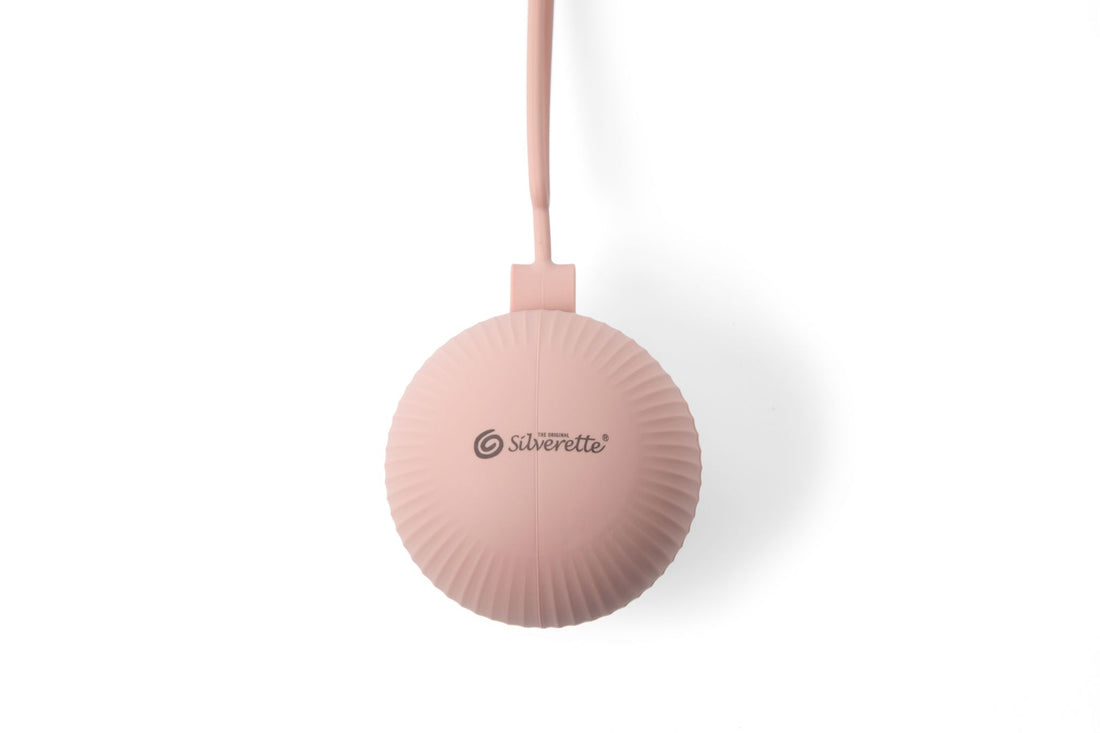
Doula Mae Birth Services, reviewing as both a maternal support specialist and a mother who exclusively pumped for a week, described the relief from wearing silver nursing cups between pumping sessions as "instant" and "cooling" — and specifically kept them in her permanent postpartum kit afterward for pumping-related friction.
Source: Doula Mae Birth Services, independent review — see our full Silverette review for the complete quote and context.
For pumping specifically, one detail is worth knowing: some mothers find a plain metal dome digs in slightly if they're wearing a tighter pumping bra or sleeping in the cups overnight after a late pump. Silverette sells a small silicone comfort ring (the O-Feel Ring, $24.99) that fits around the base of the cup for exactly this — an independent reviewer, Sarah Fama, specifically noted it made wear noticeably more comfortable for her.
What actually helps: fixing flange fit first (it's free and usually solves most of the pain on its own), then a barrier product like silver cups to protect and soothe nipples during the recovery window between sessions.
What doesn't help much: pushing through with a poorly fitted flange and hoping cream or cups alone will fix it — they ease the symptom, not the cause.
FAQ
Is some soreness normal when I first start pumping?
Mild tenderness in the first few days as you find your fit and routine is common. Ongoing pain, cracking, or bleeding is not — that's a sign to check flange size and technique rather than something to push through.
Can I use silver cups while pumping, or only between sessions?
Silverette markets the cups for wear between sessions, not during active pumping itself — remove them before attaching the flange, same as you would before a direct feed.
Do I need a different flange size for each breast?
It's genuinely common — many mothers have slightly different nipple sizes on each side. If one side still hurts after resizing the other, measure it separately rather than assuming both sides match.
Should I just turn the suction down if it hurts?
It's a reasonable first troubleshooting step and won't cause harm to try, but if pain continues even at a lower, comfortable setting, that usually points back to flange fit rather than suction strength.

For Recovery Between Sessions
Silverette Cups + O-Feel Ring
$69.99 + $24.99 ring
Check Today's Price →✓ FDA-registered · ✓ Reusable for years
Remember: fix the flange fit first — it's free and usually solves most of the pain on its own. Cups help with recovery, not the underlying cause.
Got the flange fit sorted?
See how reusable silver cups can help protect and soothe nipples between pumping sessions.
Shop Silverette Nursing Cups →