
Baby Wakes 20–30 Minutes After Being Put Down: Why & What to Do
Baby falls asleep fine — in your arms, at the breast, or with a bottle — but wakes up crying 20–30 minutes after you put them down. Here's why that transition keeps failing, and what actually helps.
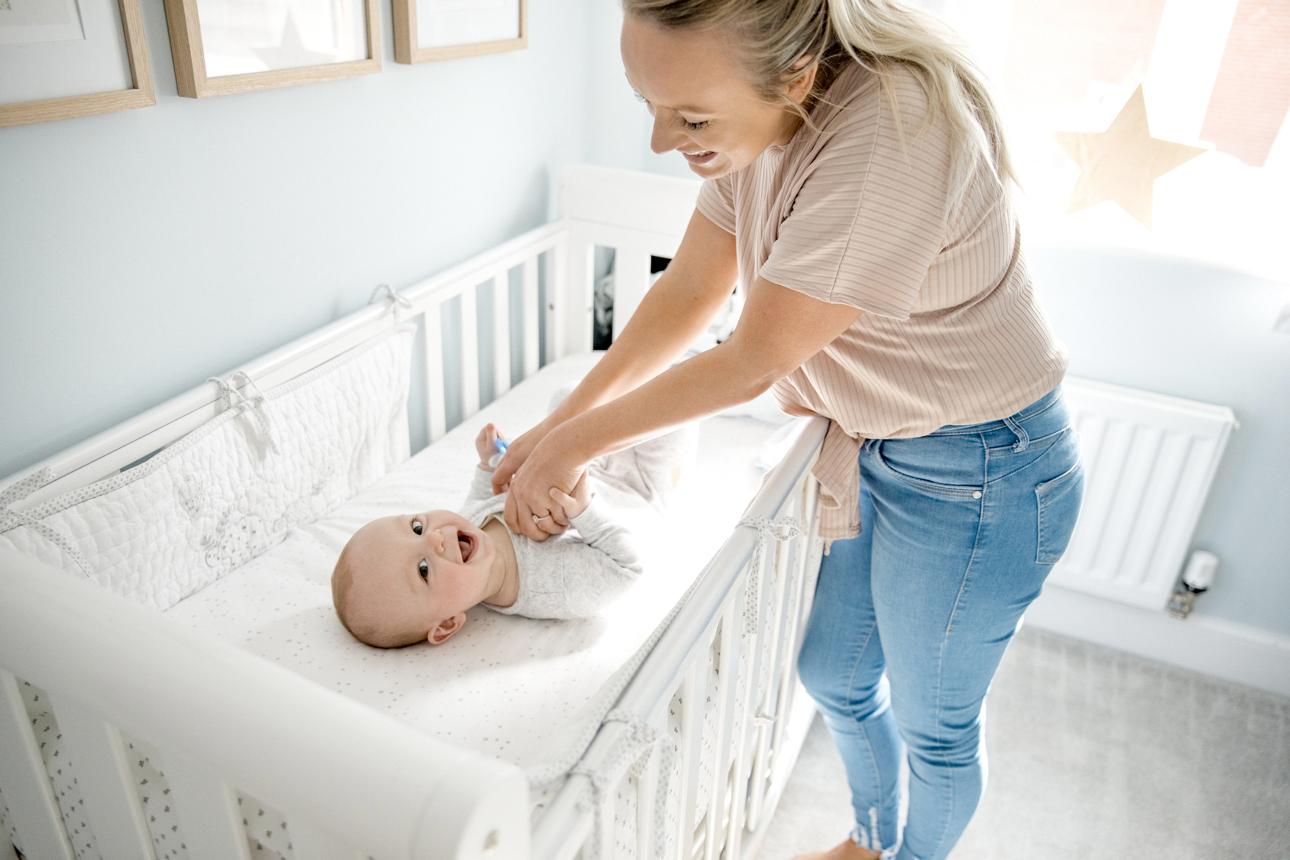
This pattern is one of the most common things parents search for, and it's also one of the most misread — it looks like the crib is the problem, but it's usually the transition into the crib that's the actual issue.
Why your baby wakes 20–30 minutes after being put down
The first sleep cycle of any sleep period is typically the shortest and lightest — for many babies, it lands right around 20–30 minutes. During that first cycle, your baby is in a lighter stage of sleep than they'll be in later, which makes them far more sensitive to any change in their surroundings. If they fell asleep in your arms, warm and moving, and wake up flat, still, and alone in a crib, that mismatch is often enough to fully wake them rather than let them settle into the next cycle.
Is This the 4-Month Sleep Regression?
If your baby suddenly started waking 20–30 minutes after being put down, you may be wondering whether you're seeing the 4-month sleep regression. It can be part of the picture, especially if the change appeared suddenly around this age, but the timing alone doesn't prove that a regression is the cause.
Around four months, many babies go through an important shift in how their sleep is organized. Sleep becomes more structured, with clearer transitions between different sleep stages. That can make brief arousals easier to notice. A baby who previously moved from one stage to another without fully waking may suddenly stir, cry, or look for the same conditions they had when they first fell asleep.
This is why baby waking 20 minutes after being put down can sometimes appear during the 4-month sleep regression. If your baby falls asleep while being held, fed, rocked, or bounced, then reaches a lighter sleep stage in a crib, the difference between those two environments may become much more noticeable. They may wake because the conditions no longer match what they remember from the moment they fell asleep.
But a 20–30 minute wake-up can happen at other ages too. A difficult transfer, an uncomfortable room temperature, an overtired baby, or a wake window that no longer fits your baby's current stage can create the same pattern. In other words, the clock tells you when your baby is waking; it doesn't necessarily tell you why.
If your baby is also suddenly taking short naps, fighting bedtime, waking more frequently overnight, or needing much more help to fall asleep, the bigger pattern may be more useful than the 20-minute wake-up by itself. Look at what changed during the last week or two rather than assuming every short wake-up is automatically a sleep regression.
The most useful first step is usually to check the basics: how your baby falls asleep, whether the transfer changes their environment, and whether their current wake window still makes sense for their age and stage. You don't need to change everything at once. Start with the factor that best matches what you're seeing, then give that adjustment a few nights before deciding whether it helped.
What could be happening at this stage
| Possible cause | How to spot it |
|---|---|
| Sleep association mismatch | Falls asleep held/fed/rocked, wakes up flat in crib |
| Temperature drop | Crib or room is noticeably cooler than being held |
| Startle reflex on transfer | Baby stirs the moment they're laid down or a swaddle/arm is loose |
| Overtiredness | Wake window before this sleep was too long, sleep stays fragile |
4 things to check
- How baby falls asleep. If they're fully asleep before being moved, that's the single biggest factor — the gap between "asleep in arms" and "asleep in crib" is exactly where this wake-up tends to happen.
- The transfer itself. A slow, low, gradual lay-down makes a real difference for a lightly sleeping baby.
- Room temperature. A crib that's noticeably cooler than your arms can be enough of a change to wake a light sleeper.
- Wake window before this sleep. Both too-short and too-long wake windows can make that first sleep cycle more fragile than usual.

Don't rush the put-down. Moving straight from "eyes closed" to "in the crib" is the most common trigger here — waiting until your baby is in a deeper stage of sleep (heavier limbs, slower breathing) before transferring often solves this on its own.
What to try tonight
Wait a little longer after your baby's eyes close before attempting the transfer — aim for limp, heavy limbs and slower breathing rather than moving the moment they look asleep. Keep the transfer itself slow and low, and consider whether the crib feels noticeably colder than your arms; a sleep sack or slightly warmer sleepwear can help close that gap.
When this pattern usually changes
As babies get a bit older, their first sleep cycle naturally becomes more stable and less sensitive to these transitions. In the meantime, most families see improvement within a week or two of adjusting the timing and method of the transfer — it's one of the more reliably fixable patterns in this age range.
Most likely cause: a mismatch between how baby fell asleep and where they wake up, hitting right as the first sleep cycle ends.
First move: wait for deeper sleep signs before transferring, and keep the transfer slow.
Quick FAQ
Is this the same as the 45-minute wake-up pattern?
They're related but not identical — this is specifically about the transfer into the crib, while 45-minute wake-ups can happen later as babies move between sleep cycles. Many babies experience both patterns.
Should I just let my baby fall asleep in the crib from the start?
That can help long-term, but it's a bigger change and often takes longer to adjust to. Improving the transfer itself usually brings faster relief while you work toward that if you want to.
Could this mean my baby is hungry again after only 20–30 minutes?
It's unlikely at that short an interval — this timing can line up with a sleep-cycle transition. If you're concerned about feeding needs, use your baby's usual feeding pattern and pediatric guidance rather than the clock alone.
Why does my baby wake 20 minutes after being put down?
A 20-minute wake-up often happens when your baby reaches a lighter part of the first sleep cycle and notices that the conditions have changed. If they fell asleep in your arms, at the breast, with a bottle, or while being rocked, the difference between that setting and the crib can be enough to wake them fully.
Why does my baby wake 30 minutes after falling asleep?
A 30-minute wake-up can happen at the end of the first sleep cycle, especially when a baby is overtired or the transfer from arms to crib was difficult. Look at both the transfer and the wake window before assuming the problem is the crib itself.
Why does my baby sleep in my arms but wake up in the crib?
Your arms provide warmth, movement, contact, and familiar sleep cues. The crib provides a very different environment. If your baby reaches a lighter sleep stage and notices those cues have changed, they may wake and look for the conditions they had when they fell asleep.
Is waking 20–30 minutes after bedtime a sleep regression?
It can happen during the 4-month sleep regression, but the pattern is not specific to a regression. Transfer problems, overtiredness, changing wake windows, and sleep associations can all produce similar short wake-ups.
How do I stop my baby waking after being put down?
Start by checking the transfer: wait for deeper sleep signs, move slowly, and keep the environment as consistent as possible. If the pattern continues, look at the wake window before sleep and how your baby usually falls asleep.
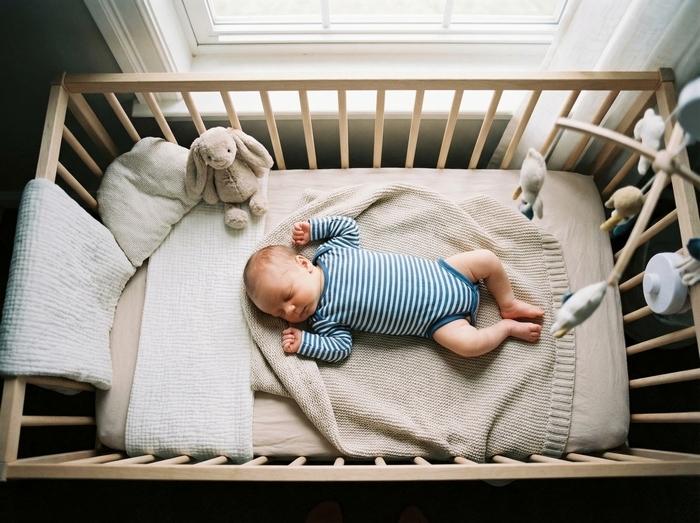
Not sure what stage your baby is in?
Free Baby Sleep Calculator
Try It Free →✓ Takes ~2 minutes · ✓ No sign-up required
Quick tip: Watch for heavy, floppy limbs and slower breathing before you move — that's a better cue than "eyes closed" for a safe transfer.
Not sure what's behind your baby's sleep changes?
Answer a few quick questions and see what may be happening right now — and what to expect next.
Try the Free Baby Sleep Calculator →Further Reading
- American Academy of Pediatrics — infant sleep guidance, healthychildren.org
- Cleveland Clinic — infant sleep cycles overview, my.clevelandclinic.org